ESFPThe enthusiastic improvisor
- of the population
- 6%
- of men
- 5.1%
- of women
- 6.7%
ESFP preferences
- ExtraversionGets energy from the outer world of people and activity
- SensingPrefers to take in concrete facts and details
- FeelingPrefers to decide with values and people in mind
- PerceivingPrefers a flexible, open approach to life
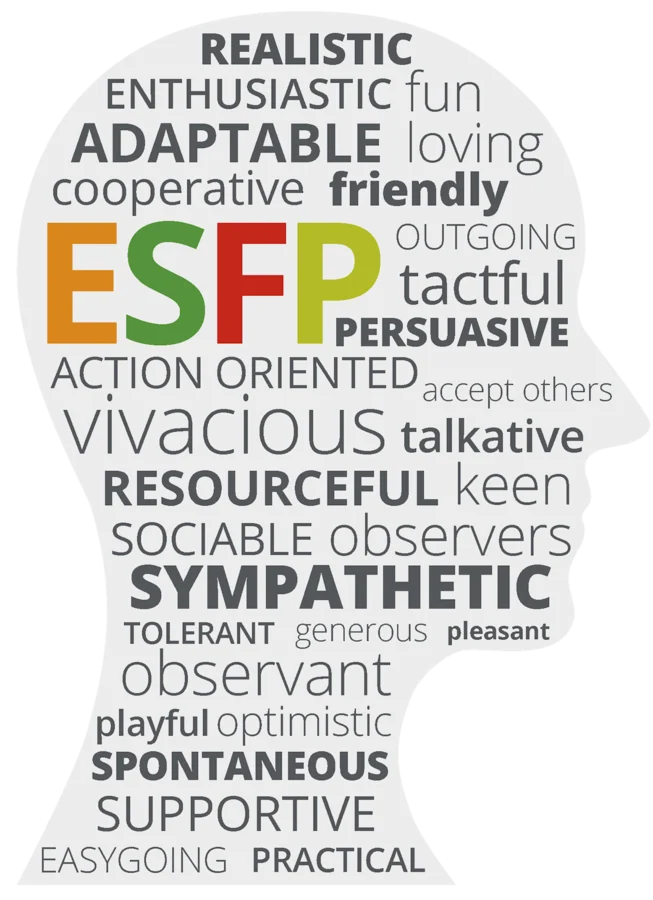
ESFP strengths and weaknesses
ESFPs at their best
People love ESFPs—and ESFPs love people. They’re likely incredibly social and outgoing, and they tend to know exactly what others need in the moment. In fact, they often live in the moment. They love trying new things, taking trips, and experimenting with different majors or careers.
People with ESFP preferences tend to thrive when they’re in a group. They love to share experiences with other people—whether in their personal lives or their work environment.
Potential development areas for ESFPs
ESFPs have a lust for life. They often get distracted by new things, causing them to abandon existing obligations. It can be difficult for ESFPs to stay focused or commit to any one path, which may give them a reputation for being flighty or unreliable.
They also tend to experience anxiety about these behaviors because they don’t want to let other people down—so it can become a bit of a cycle.
Want to build your confidence and play up your strengths? Take the MBTI® assessment here and receive our personal development course on confidence for free with your purchase.
ESFPs and stress
People with ESFP preferences get stressed when they have too many plans or too much structure. They much prefer the freedom to adapt and be spontaneous.
They don’t like being forced to make decisions, and they may feel stressed when others analyze their thoughts or behaviors. Things like data and financial information tend to overwhelm ESFPs, and abstract information or concepts can cause them to feel stress at work.
If you have ESFP preferences, try these simple strategies to balance your feelings during times of stress:
- Take the time to consider what you want out of life and the steps it will take to get there. While you’re typically noncommittal, you’ll probably feel stressed if you don’t have an overarching purpose in life. It helps to keep striving toward a larger goal.
- Set a schedule. To avoid disappointing others or overexerting yourself, create a rough schedule that allows for plenty of free time.
- Don’t commit to plans you can’t keep. It’s OK to say no to plans you’re not fully invested in. It’s better to avoid activities you don’t enjoy rather than cancelling at the last minute.
Explore the 16 types
Compare the strengths and weaknesses page across types.
- ISTJresponsible realist
- ISFJpractical helper
- INFJinsightful visionary
- INTJconceptual planner
- ISTPlogical pragmatist
- ISFPversatile supporter
- INFPthoughtful idealist
- INTPobjective analyst
- ESTPenergetic problem solver
- ESFPenthusiastic improvisor
- ENFPimaginative motivator
- ENTPenterprising explorer
- ESTJefficient organizer
- ESFJsupportive contributor
- ENFJcompassionate facilitator
- ENTJdecisive strategist
Your next step
Take the official MBTI® assessment.
There’s no better time to invest in yourself.