ENFJThe compassionate facilitator
- of the population
- 2.2%
- of men
- 1.4%
- of women
- 2.8%
ENFJ preferences
- ExtraversionGets energy from the outer world of people and activity
- IntuitionPrefers to take in patterns and possibilities
- FeelingPrefers to decide with values and people in mind
- JudgingPrefers a planned, decided approach to life
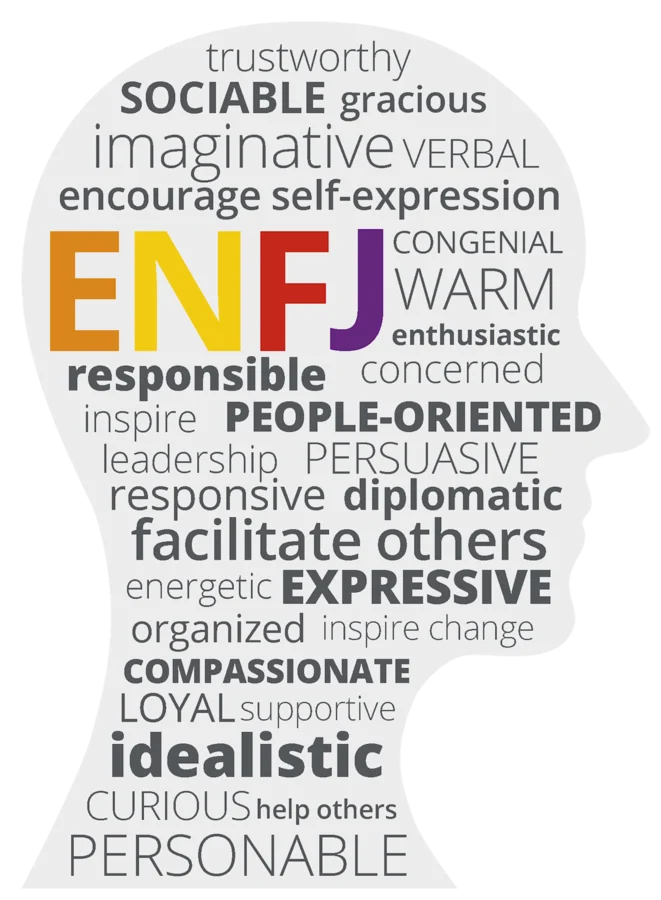
ENFJ strengths & weaknesses
ENFJs at their best
At their best, people with ENFJ preferences are encouraging leaders who truly care about the people on their teams—both at work and in their personal lives.
They naturally infer the thoughts, feelings, and motivations of others. And it’s the same for shared team or organizational goals, too. ENFJs gently encourage others by speaking their language and appealing to their values. This helps them smooth out areas of conflict in a group.
Potential development areas for ENFJs
Despite their best intentions, ENFJs might become so focused on creating or maintaining harmony that they unintentionally sweep larger issues aside. Their efforts to inspire and encourage others may come across as pushy or overbearing at times.
To avoid overstepping boundaries, ENFJs may need to take a step back from time to time and let others figure things out for themselves.
Want to build your confidence and emphasize your strengths? Take the MBTI® assessment here and receive our personal development course on confidence free with your purchase.
ENFJs and stress
Because they’re so community minded, people with ENFJ preferences often get stressed by what they see as a lack of communication in a team or group. They need to feel that their ideas are being heard.
Working alone or with uncooperative teammates can also cause a great deal of stress, as this doesn’t allow ENFJs room to brainstorm or explore the bigger picture. They dislike procrastination or unexpected changes that disrupt their typically structured plans.
If you have ENFJ preferences, try these simple strategies to balance these feelings during times of stress.
- Make it clear to teammates that your lines of communication are open—but be careful not to set unattainable expectations. Let people come to you when they need someone to talk to.
- Remind yourself that some disagreement is unavoidable when a group of people get together. It’s not always your job to resolve conflict. Try to let some things go and avoiding taking everything personally.
- Keep tabs on your own feelings. You probably focus on other people’s feelings and ambitions more than your own. Try some gentle meditation to see if this helps you tap into your own feelings. And be sure to speak up about anything you need.
Explore the 16 types
Compare the strengths and weaknesses page across types.
- ISTJresponsible realist
- ISFJpractical helper
- INFJinsightful visionary
- INTJconceptual planner
- ISTPlogical pragmatist
- ISFPversatile supporter
- INFPthoughtful idealist
- INTPobjective analyst
- ESTPenergetic problem solver
- ESFPenthusiastic improvisor
- ENFPimaginative motivator
- ENTPenterprising explorer
- ESTJefficient organizer
- ESFJsupportive contributor
- ENFJcompassionate facilitator
- ENTJdecisive strategist
Your next step
Take the official MBTI® assessment.
There’s no better time to invest in yourself.