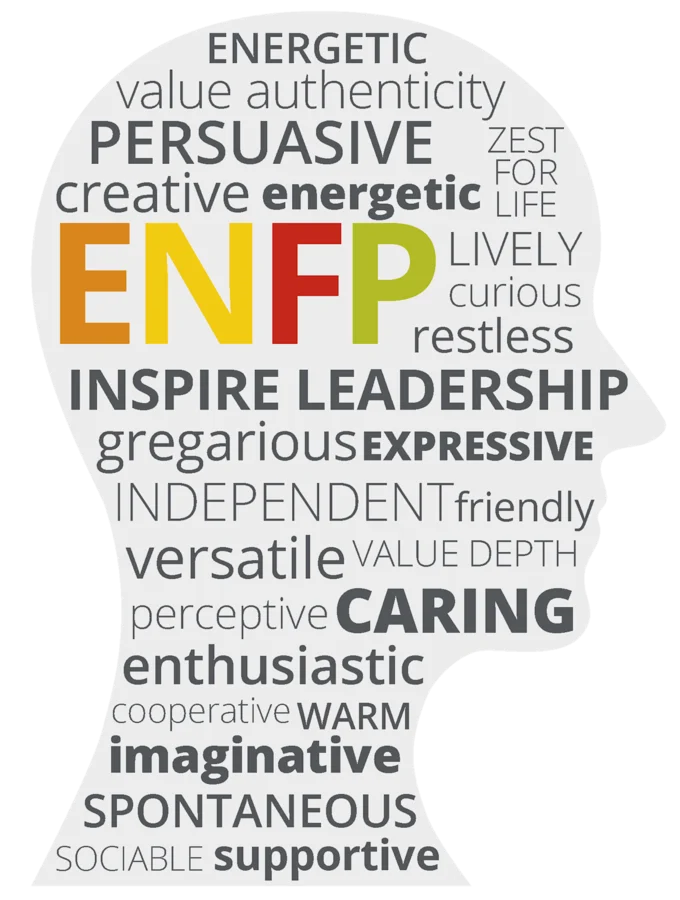
ENFPThe imaginative motivator
- of the population
- 8.2%
- of men
- 5.8%
- of women
- 10.2%
ENFP preferences
- ExtraversionGets energy from the outer world of people and activity
- IntuitionPrefers to take in patterns and possibilities
- FeelingPrefers to decide with values and people in mind
- PerceivingPrefers a flexible, open approach to life
ENFPs and careers
ENFPs at work
People with ENFP preferences are excited by new challenges, so they’re always looking for a career that encourages innovative thinking, creativity, and the opportunity to work with lots of different people.
They’re unlikely to zero in on their dream job straightaway, but they’ll pursue it long-term. While they’re looking, they’ll likely bounce between a few different career paths. Although it may seem like they’re unable to commit to a profession, they tend to learn new skills with each career and simply enjoy keeping their options open.
Around 7% of global leaders have ENFP preferences. Hardly surprising when you consider their gregarious, outgoing nature and their creative approach to problem-solving!
Popular occupations:
- Actor
- Artist
- Musician
- Entrepreneur
- Author
- Motivational speaker
- Lawyer
- Marketing
- Human resources
- Counselor or career counselor
- Teacher
- Coach or trainer
- Nonprofit
- Startups
Career trends for ENFPs
People with ENFP preferences usually want to leave their career paths open to new possibilities. They’re likely to shift or entirely change their careers more than once in their lives.
Despite this, they tend to look for careers where they can express their creativity, work with new people, and have some influence in innovative problem-solving. They’re also adept at creating positive change and pursing newfound interests, which often leads to an interest in entrepreneurship or start-up organizations.
Leadership style of ENFPs
People with ENFP preferences tend to make charismatic and creative leaders. They’ll often create diverse teams, bringing together people of differing talents and opinions who ultimately work well together. They love to hear a range of opinions when they’re working on a project; they’ll usually encourage everyone on the team to contribute solutions and approaches.
As leaders, ENFPs are usually incredibly democratic. Their energy can be contagious. However, their directions might not always be as concise as others would like, and they may promise more than they can deliver, which some employees could find stressful.
ENFPs on a team
ENFPs are often the most energetic members of their teams—the ones who keep everyone else on their toes and excited about the project.
They’re quick to try new approaches and open to hearing other people’s ideas. However, they may bounce from task to task and struggle to focus on one thing at a time. They work best when there is lots of room for experimentation, with teammates who are also open to new ideas.
Want to learn more about how to stay motivated? Take the MBTI® assessment here and you’ll get exclusive access to our personal development course on motivation with your purchase!
Explore the 16 types
Compare the careers page across types.
- ISTJresponsible realist
- ISFJpractical helper
- INFJinsightful visionary
- INTJconceptual planner
- ISTPlogical pragmatist
- ISFPversatile supporter
- INFPthoughtful idealist
- INTPobjective analyst
- ESTPenergetic problem solver
- ESFPenthusiastic improvisor
- ENFPimaginative motivator
- ENTPenterprising explorer
- ESTJefficient organizer
- ESFJsupportive contributor
- ENFJcompassionate facilitator
- ENTJdecisive strategist
Your next step
Take the official MBTI® assessment.
There’s no better time to invest in yourself.